

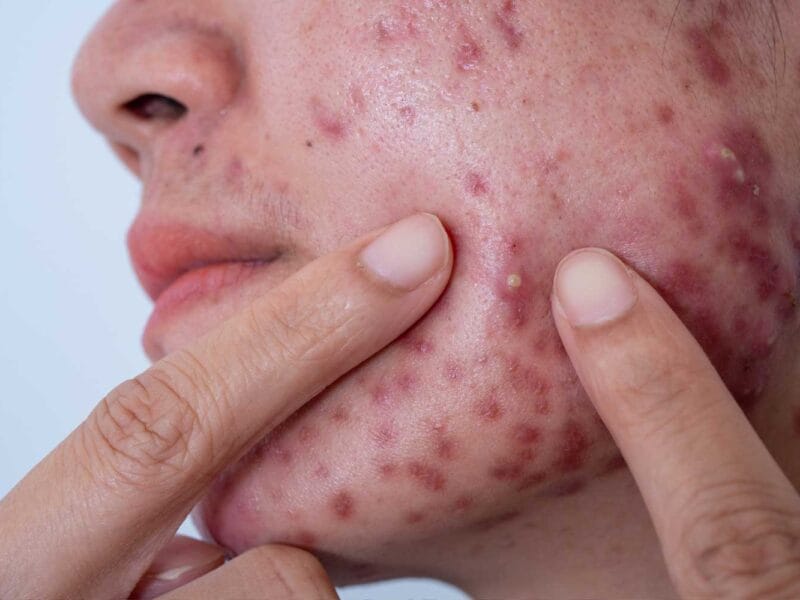
Few among us have stood before a mirror first thing in the morning and resisted the urge to pop a pimple that cropped up overnight. But it usually comes with a steep cost, because that urge can lead to all kinds of inflammation and create a wound that takes a long time to heal.
That said, there are some instances when it’s OK to pop – as long as you know what you’re doing. And that’s what this blog post is about: how to properly pop a pimple at home, as well as recognizing when a pimple or cyst requires professional attention.
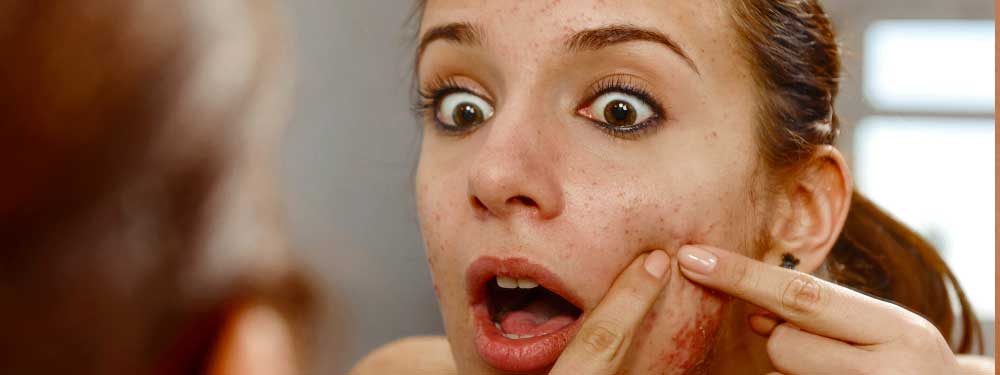
Understand the different kinds of acne
First, a quick overview of the main types of acne so you don’t cause yourself any unnecessary inflammation, infection, or scarring.
Comedones. These are your blackheads and whiteheads. They’re often caused by dead skin cells, sebum, or debris being trapped inside a pore. Comedones, in some scenarios, can be carefully squeezed to release their trappings.
Papules and pustules. Papules are early-stage pustules, which are generally caused by bacteria trapped in the skin as a result of compromised hygiene. Pustules form once papules fill with pus. They appear either as a bubble-like white, raised bump or a bright red, raised bump. The pus can be released from a pustule in some scenarios. Papules, however, should not be squeezed.
Cysts and nodules. They’re buried deep in the skin and swell easily when they’re pressed. These need to be drained by a board-certified dermatologist because there’s a high risk of causing permanent scarring.
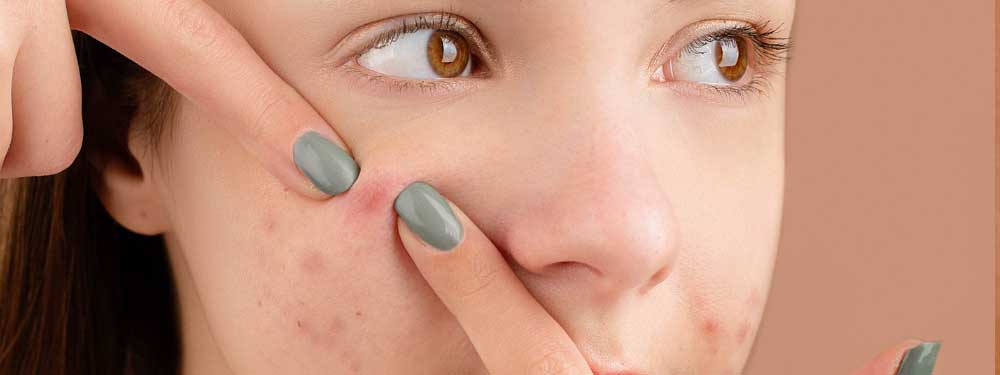
How to pop a pimple (and when to stop)
If your pimple has a white or yellow head, then it’s OK to pop. At that point, the blemish is superficial.
But there’s some preparation that needs to be done before you squeeze. Foremost, your hands and face need to be clean to avoid infecting the eventual lesion. After washing your hands, wash your face with warm water and a gentle cleanser.
Then, lightly press a warm washcloth against the pimple for a few minutes. This will help open the pore.
If the head of the pimple doesn’t burst immediately upon squeezing, stop and wait another day. And if you feel any pain around the pimple, see a dermatologist. They have an array of treatment options that they can tailor to your unique situation, including, for example, injecting the area with a low-potency corticosteroid that can resolve the blemish in 24 hours.
Once your pimple bursts and the pus is drained, hold a clean, cold washcloth against the lesion. (Don’t keep squeezing once you see blood. That could worsen inflammation.)
Then, disinfect and dry out the lesion by blotting it with rubbing alcohol. Later – before bed, and in the days to come – apply a salicylic acid spot treatment, which will calm any inflammation and facilitate healing.
Keep in mind, the results will vary, even if you follow each of these steps to the letter. That’s because there are a lot of variables at play here, including your age. The older we are, the longer it takes our skin to heal from pimple popping. Our skin loses its ability to retain moisture over time, and that’s why hyperpigmentation can linger in place of your popped pimple for months after the fact.
Finally, a potentially safer way to go about all this is to use a pimple patch instead. Using the same technology as medical hydrocolloid bandaging, many patches can make a blemish disappear overnight, or, at least, significantly reduce the likelihood that it will need to be popped before it goes away on its own.
 New Surveys Suggest Gen Z is Buying into Misinformation About Sun Safety