

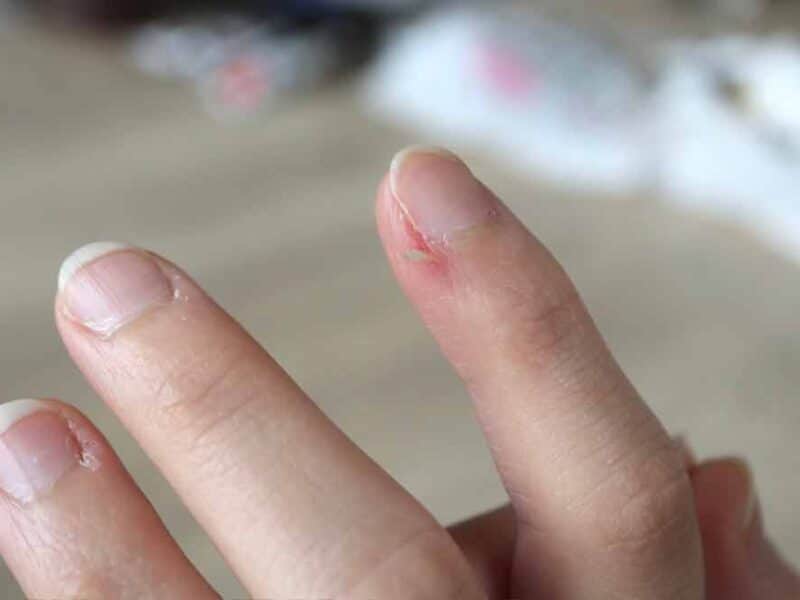
Tiny as they are, a hangnail can be a giant pain. And, no, it’s not just you. We have a lot of nerve endings in our fingers, which makes the skin especially sensitive. That’s how a tiny skin tear can cause such outsized throbbing, tenderness, and swelling.
Hangnails generally go away on their own, but there are ways to speed up the healing process and to keep new ones from forming.
What is a hangnail, exactly?
Before we get to that, we need to take a closer look at what a hangnail actually is because it isn’t a hanging nail – or even a nail at all. It really refers to the sliver of skin next to the nail. It can feel hard because the skin is usually dry and brittle.
The drier your skin, the more vulnerable your cuticles are to tears and snags.
People with skin conditions like psoriasis or eczema tend to be prone to hangnails.
Nail polish remover can increase your risk of a hangnail, as can a manicure. When the technician tries to push the cuticles back, it can weaken the connection between the nail and the skin.
Our cuticles help protect us from infection, so it’s best to leave them alone.
Can you safely remove a hangnail on your own?
If you’re reading this because you’re looking for some relief from a hangnail, try soaking your fingertips in warm water or a warm water and white vinegar solution, which can help stave off bacteria. The ratio of warm water to vinegar should be about three to one. This will soften the skin around your nail.
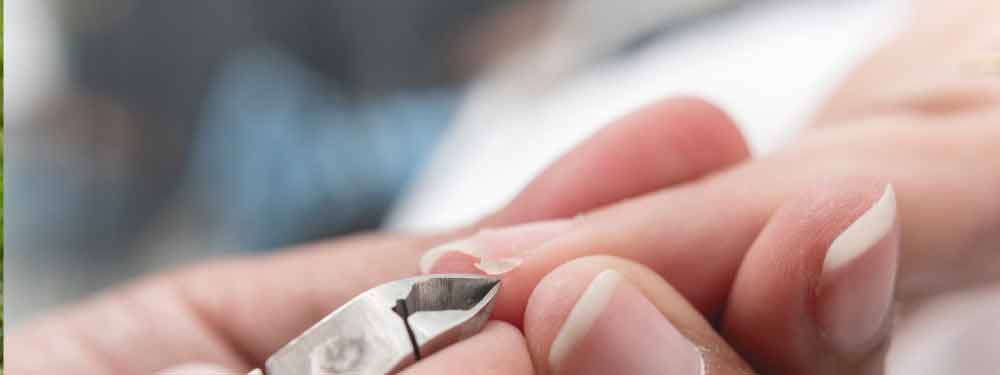
Once your skin feels soft, snip off the hangnail with nail clippers or a pair of cuticle scissors. To ensure your tool is sterile, wipe it down with rubbing alcohol.
Then apply an ointment like Vaseline or Aquaphor to the resulting wound. This will protect your skin and keep it hydrated as it heals. Ointments are usually more effective at sealing in moisture than creams or lotions, and they’re less likely to cause an allergic reaction than an antibiotic ointment like Neosporin.
If you’d prefer to not trim your hangnail, cover it in ointment and wrap your finger with a Band Aid until it heals (around three to five days) to prevent further tearing. You may have already noticed – frustratingly – that each time it gets caught on something, it becomes an even larger, more painful wound.
Under no circumstances should you bite off your hangnail. You’re almost certainly going to tear off more skin than you intended, and you may introduce infection-causing bacteria with your teeth.
Can you prevent new hangnails from forming?
This advice is going to sound overly simplistic, but keeping your hands moisturized will go a long way toward preventing future hangnails from forming. Try to apply cream or lotion throughout the day, especially after washing your hands. That’s because any time you wash your hands, even with a gentle soap, you’re stripping your skin of its natural moisture.
It’s a good idea, too, to reach for a thicker moisturizer or an ointment before bed.
When you should see a doctor
Redness, swelling, or pus around the hangnail may indicate an infection. A dermatologist can determine what kind of infection you may have and the best way to treat it, whether that’s with oral or topical antibiotics or with an antiseptic soak.
 A Tan Isn’t That Bad, Is It?