

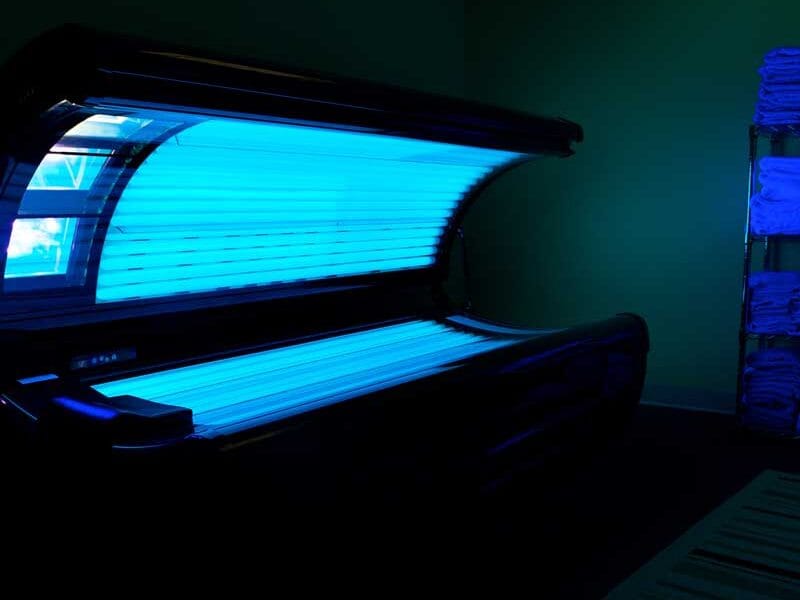
By now, we’re all aware that tanning beds put us at higher risk for skin cancer. But a new study indicates that it’s even worse than we knew.
First, let’s revisit what we already knew. If you’ve ever used a tanning bed, you’ve increased your risk of developing melanoma, the deadliest form of cancer. By how much, exactly? It was widely believed that indoor tanners were 74% more likely to develop melanoma than those who had never stepped inside a tanning salon.

However, that now appears to be a severe miscalculation. This new research from Northwestern Medicine and the University of California, San Francisco, suggests that tanning bed usage actually triples the risk of melanoma.
Researchers analyzed several thousand medical records, comparing melanoma rates in tanning bed users and nonusers. They also used single-cell DNA sequencing to investigate 182 skin biopsies from tanning bed users and control subjects.
They found that the UV light from tanning beds mutates skin cells and causes “melanoma-linked DNA damage across nearly the entire skin surface.”
“In outdoor sun exposure, maybe 20% of your skin gets most of the damage,” Pedram Gerami, MD, the study’s senior author, said. “In tanning bed users, we saw those same dangerous mutations across almost the entire skin surface.”
Dr. Gerami said, over the years, he noticed an unusually high number of women under 50 with a history of multiple melanomas, and he suspected tanning bed usage when they were younger was the reason why.
These new findings tell us that the DNA damage caused by tanning beds is on an entirely different level from the kind caused by sun exposure.
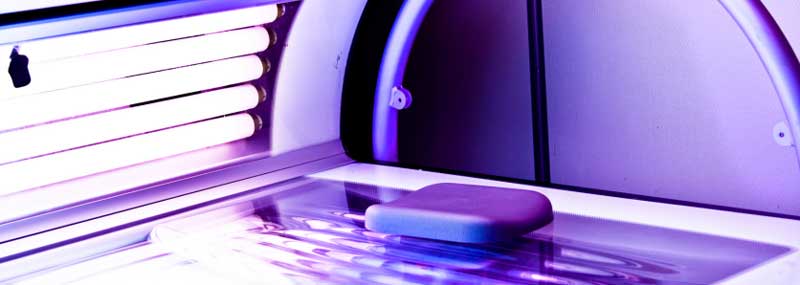
Cell mutations permanently alter DNA. Many are usually harmless, but some occur in dangerous places, like genes that control growth, and that’s where cancer can begin. This study shows that tanning bed users have twice as many of these mutations as nonusers.
Skin cancer is generally identified through moles and other skin lesions. This study found that, among tanning bed users, DNA changes were present in areas of the skin that looked perfectly normal.
“Even in normal skin from indoor tanning patients, areas where there are no moles, we found DNA changes that are precursor mutations that predispose to melanoma,” Dr. Gerami said in a press release. “That has never been shown before.”
This means that tanning beds quietly alter the DNA in spots on the body most wouldn’t think to look for skin cancer, like the lower back and buttocks. And, of course, the longer it goes undetected, the more difficult it can be to treat.
If you frequently tanned earlier in life, indoors or out, schedule a total-body skin exam with a board-certified dermatologist. Depending on what they observe during this initial evaluation, they may recommend routine skin checks in order to keep a close eye on any new moles or lesions.
 Don’t Let Uncomfortably Dry and Itchy Nipples Keep You Down This Winter