

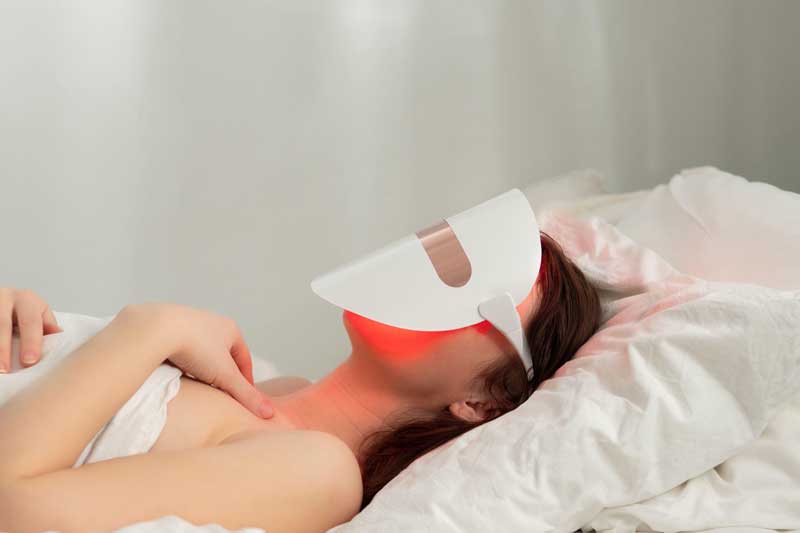
As we descend into darkness (or, at least, darker days), many are finding hope in a red light—as in red light therapy masks, wands, and helmets. They’re a fixture on social media, where people post (and post) about theirs both self-seriously and self-mockingly. After all, the masks are an unusual sight, even as we’ve grown accustomed to them.
Their popularity, as we’ve discussed before in this blog, is not the result of just another empty trend. There’s actual science behind red light therapy, with legitimate studies showing its effectiveness. For those who missed our earlier post, here’s a quick recap:
Red light therapy exposes skin to low levels of red or near-infrared light-emitting diode (LED) light. Unlike ultraviolet light, which can cause skin cancer and premature or accelerated skin aging, red or near-infrared LED light has been shown to stimulate elastin and collagen synthesis, proteins that help maintain skin’s elasticity and strength. In doing so, red light may minimize wrinkles and improve skin texture and hyperpigmentation.
Near-infrared light can reduce inflammation and accelerate wound healing, although no one’s exactly sure how the light produces these effects. NASA scientists first noted them in the 1980s when the cuts and scrapes on their hands seemed to heal more quickly while they worked under red and blue LED light.
Should you buy a red light therapy mask?
All of this begs the question: Is a red light therapy mask a savvy investment?
In short, yes. If you’re unable to visit a dermatologist for in-office treatments on a regular basis, a red light therapy mask is a budget-friendly means to address several skins concerns simultaneously, as long as it’s used consistently. (Wands and masks can both work, but wands typically require more effort because you have to manually move them across your face.)
Even more, it’s safe to use light therapy in conjunction with other treatments, including retinol. They work in different ways, so their benefits are likely to be additive. And light therapy is safe for nearly every skin type, even if you have eczema or rosacea. People who are pregnant or who have skin infections, conditions that make them sensitive to light, or certain autoimmune conditions should consult a board-certified dermatologist before trying a light therapy device.
Just be sure to close your eyes during use because the light can damage them.
How do at-home devices compare to in-office options?
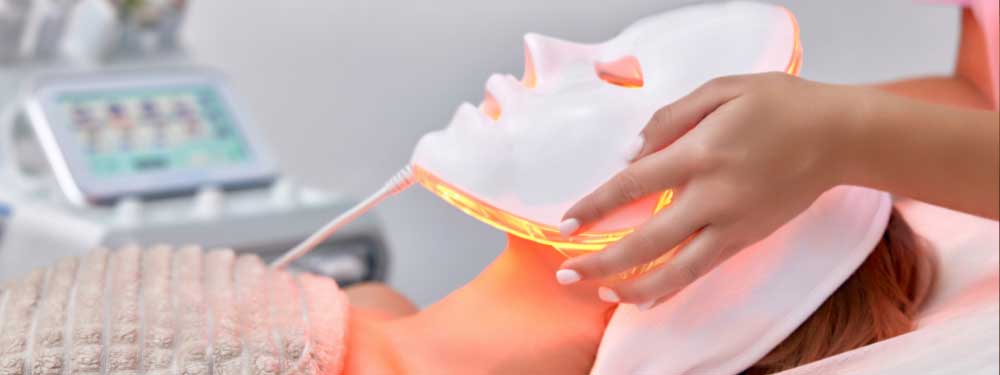
Beneficial as at-home red light therapy devices are, they’re not quite as powerful or as effective as in-office treatments. The clinical devices that board-certified dermatologists employ typically emit red or near-infrared light at higher wavelengths and intensities, which allows for deeper penetration. This causes a greater collagen and elastin boost.
If you have moderate to severe skin concerns, a combination approach can be a cost-effective treatment option. With consistency the key to light therapy, at-home tools are ideal for maintenance between treatments under the care of a dermatologist.
 Is Peptide Therapy a Miracle Cure?