

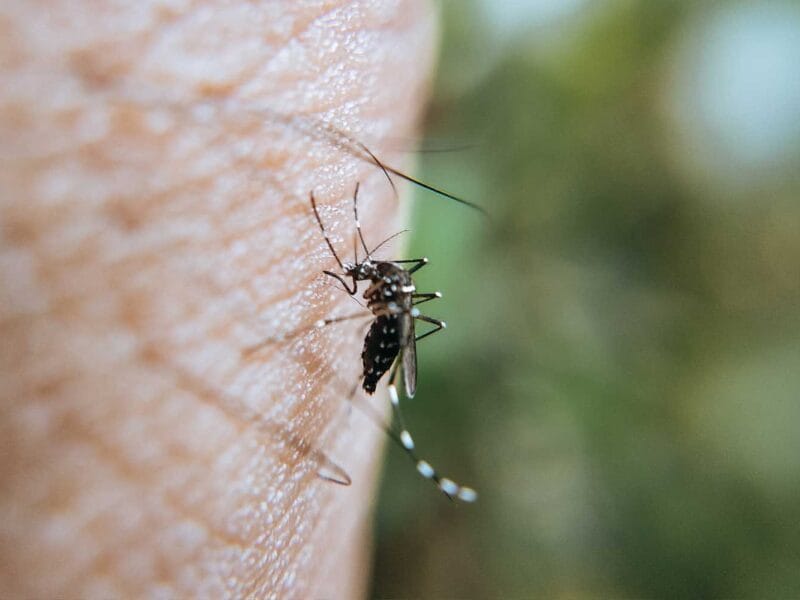
September and October are two of my favorite months. The relentless heat and suffocating humidity of the dog days of summer lift, leaving behind pleasantly warm, breezy days.
Mosquitos usually go the way of the humidity, but not always. Which can be problematic when the weather outside is so inviting. And so, we try to persevere, at least until the itchy bug bites begin to mount.
Go online, and you’ll find an endless collection of home remedies to stop the itch, like rubbing the bumps with an ice cube or slathering them with aloe.
But which, if any, are effective? And why can’t you just scratch a bug bite? Answers to both questions follow below.
The anatomy of an itch
First, why are bug bites so itchy in the first place?
In order to lay their eggs, female mosquitoes need blood. When they land on your skin in search of yours, they inject saliva using their needlelike mouths. This saliva contains proteins that numb the skin and dilate blood vessels to make feeding go faster.
Your body, as an immune response, releases histamine. The histamine is what causes itching and swelling, which are meant to signal to your brain that it needs to investigate.

Why scratching works – until it doesn’t
Scratching, as you probably discovered as a kid, relieves the itch. When we itch a bug bite, we prompt another sensation, a mild pain, which distracts the brain from the itch. Our brains respond by releasing serotonin in response, a natural pain reliever.
This is the same reason why many of the tactics found online provide relief. The pain caused by a hot spoon, the shock of a cooling spray, the tickle of a fingernail, these sensations all override the itch.
The problem with relying on scratching as your itch-relief go-to is that you can get trapped in a detrimental cycle. Serotonin helps us feel better initially, but it can eventually amplify the itch signals, causing you to scratch more. When your skin becomes damaged from too much scratching, your body responds with more histamine, and so on.
More effective options
Instead, reach for an ice pack, a cooling spray, or a menthol ointment. The most effective relief, in the short and long term, will come from a cooling agent layered with hydrocortisone. The cooling agent pulls double-duty, tricking the brain into not noticing the itch and causing the blood vessels to constrict, which helps with swelling.
An especially helpful trick for children: Cover the bite with a Band-Aid. It will help the ingredients penetrate the skin and keep their fingernails away.
Antihistamine pills, which can be taken ahead of a camping trip or every day, are more effective than topical creams because they calm the body’s overall immune response. So having them in your system will mean less of a reaction.
If you prefer hot to cold, a heat pack or warm washcloth will have the same effect as a cooling product. But steer clear of the hot spoon, which could cause a minor burn.
To avoid mosquito bites in the first place, douse yourself in insect repellent, and wear long sleeves and pants if you’re headed to a place where there’s likely to be a lot of mosquitoes, such as a hiking trail, lakeside, or recreational fields.
 How to Know If Your Skin Is Stressed Out and What to Do About It