

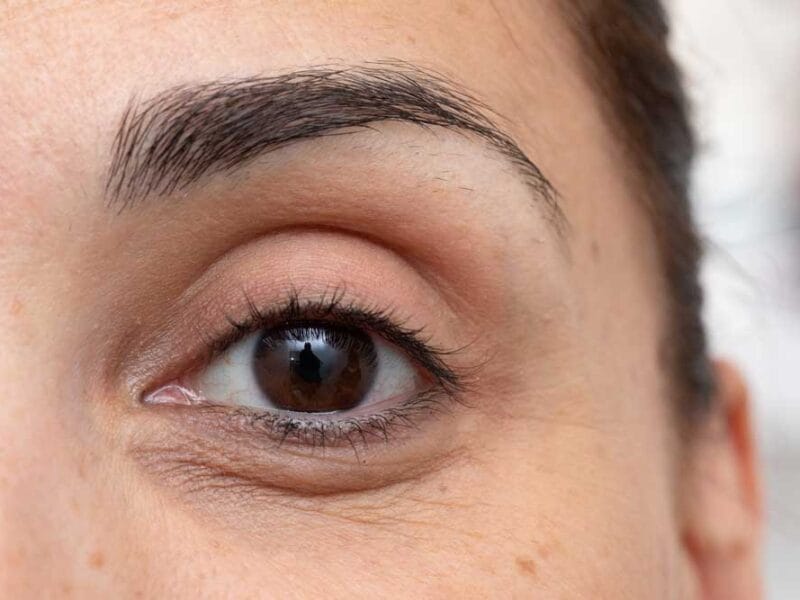
Dark circles under eyes are one of the most common complaints dermatologists here. They can leave you looking exhausted, even though you’ve slept well. They also make you look older than you are.
This widespread frustration has not gone unnoticed by the skincare industry, of course. There are lots and lots (and lots) of eye creams and serums that claim to improve dark circles, some of them that cost hundreds of dollars. But most haven’t undergone clinical testing, so they’re usually ineffective.
That doesn’t mean, however, that you’re stuck living with your dark circles. Because they occur for a variety of reasons and appear in a range of hues, the key is finding the right treatment for you.
When it comes to dark circles, there’s no one-size-fits-all solution.
Why you get dark circles
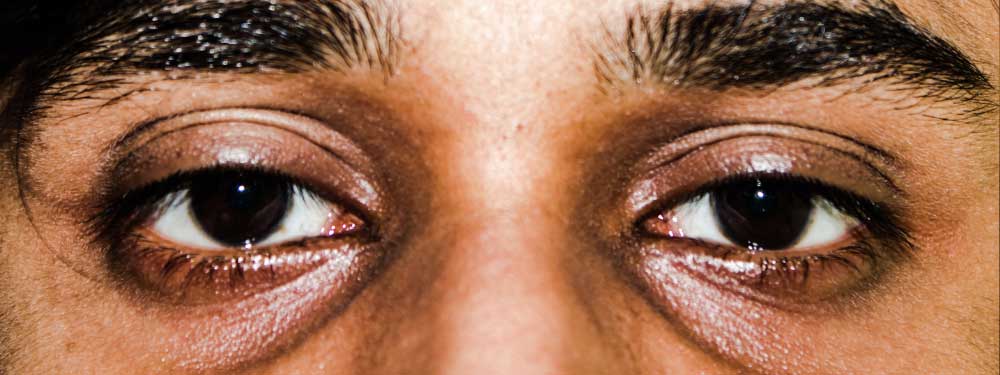
The skin around our eyes gets thinner and loses collagen as we age, making it easier for the blood vessels underneath to come through. When that happens, it creates a bluish discoloration under the eyes.
Compounding matters, the skin and muscles under our eyes can loosen, creating bags that cast a dark shadow.
You’re more likely to get dark circles if others in your family have them. Skin tone is also a factor; people with darker skin may be more vulnerable because of a brownish pigmentation under their eyes.
And allergies can temporarily cause dark circles to worsen, as can rubbing your eyes, insufficient sleep, dehydration, and smoking.
Can eye creams and serums help?
Despite claims on product packaging or advertising, there’s no scientific evidence that over-the-counter products can make dark circles disappear.
Some eye cream and serum ingredients, like caffeine, hyaluronic acid, or antioxidants, could improve the appearance of dark circles, but such a result would only be temporary.
Some eye creams, for example, combine moisturizing ingredients like hyaluronic acid, petroleum jelly, or ceramides with brightening agents like niacinamide and vitamin C to hydrate and plump under-eye skin, which can make the underlying blood vessels less apparent. But they’re the same effects you’d get with any moisturizer.
Over-the-counter products with retinol can thicken skin and help improve skin-cell turnover, which could also trigger a short-term improvement. A better option is a prescription topical retinoid, which may work better than an over-the-counter product.

What will work, then?
Depending on what’s causing your dark circles, some treatments can brighten them, keep them from getting worse, and sometimes get rid of them altogether.
LASERS Fractional laser resurfacing can remove brownish discoloration by peeling off the pigmented layer of skin. The Nd:YAG laser can target blood vessels, minimizing blue and purple discoloration. And fractional carbon dioxide lasers can minimize the appearance of dark circles by thickening the skin under the eyes.
CHEMICAL PEELS Regular chemical peels, with glycolic acid or retinol, can keep dark circles from getting worse.
MICRONEEDLING Microneedling triggers collagen production, which can tighten, plump, and smooth the texture of under-eye skin.
FILLERS Hyaluronic acid fillers can be used to boost the volume of under-eye skin, which will make dark circles less apparent. However, there is the risk of temporary bruising or swelling. And rarely, fillers have caused blockages in an artery that supplies blood to the retina, which can result in blindness. So, finding a dermatologist with extensive experience in using fillers in this scenario is critical.
Sometimes, a combination of treatments is the best approach. You may also need multiple treatments to see a difference.
Starting treatment as early as possible, when you have more collagen to work with, is likely to yield the best results. Once your skin shows signs of aging, it’s not always possible to get rid of dark circles completely.
 Thick, Durable Hair Starts with a Healthy Scalp